
Dental Bridges in Salt Lake City
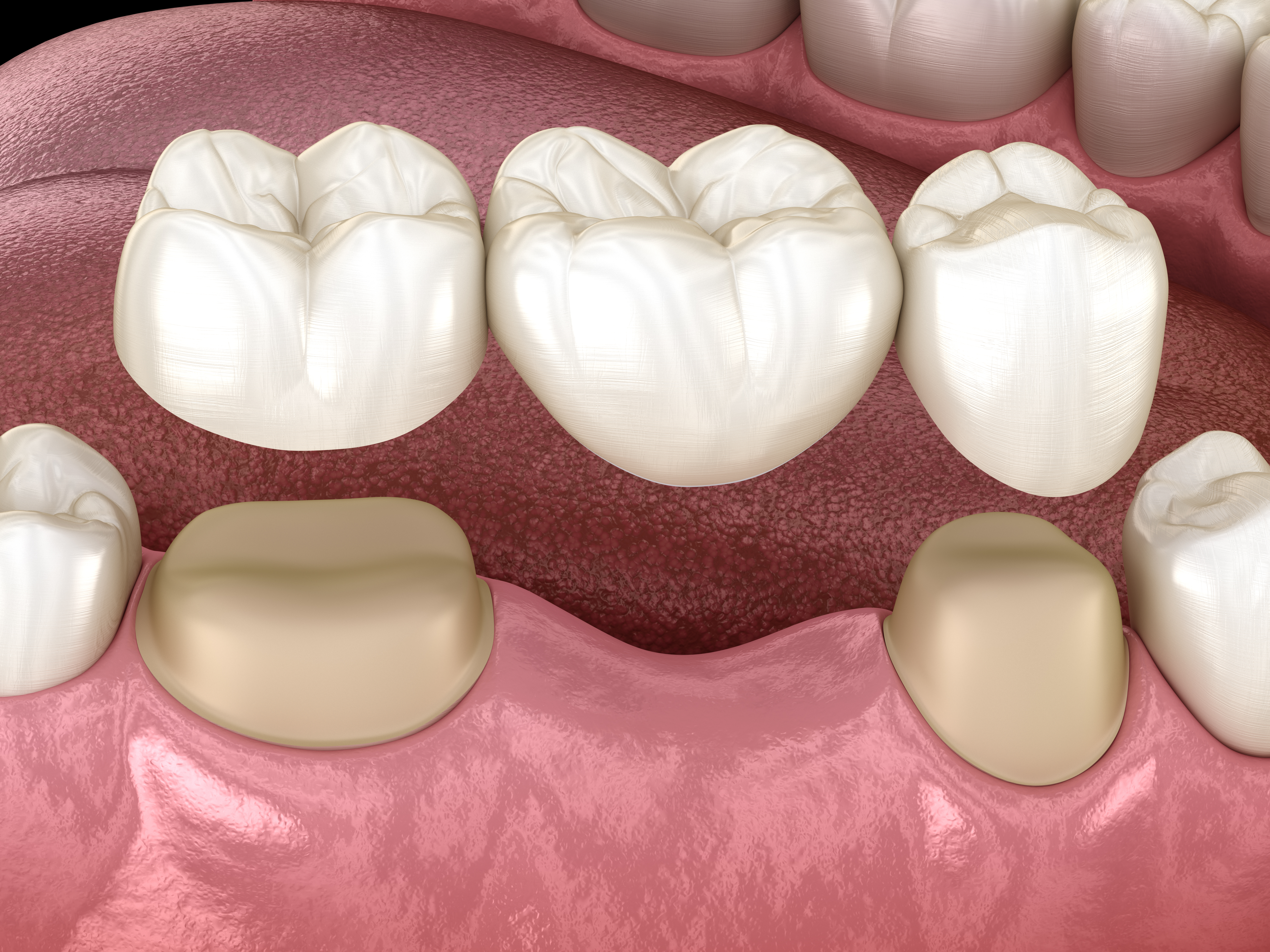
When a tooth is missing, a dental bridge is one of several ways we can replace it and restore the space. A traditional bridge uses the teeth next to the missing space to support a replacement tooth. For the right situation, a bridge can provide a predictable, functional, and natural-looking way to replace one or more missing teeth.
Dr. Keith Egan considers the missing tooth as well as the surrounding teeth, gums, bone, bite, existing dental work, and your long-term goals before recommending how the space should be restored.
What Is a Traditional Dental Bridge?
A traditional fixed bridge uses crowns on the teeth next to the missing space (abutment teeth) to support a replacement tooth (pontic). The crowns and pontic are connected as one restoration and remain fixed in the mouth.
Dental Bridge or Dental Implant?
For many patients missing a single tooth, both a bridge and a dental implant may be reasonable options. An implant replaces the missing tooth independently and can be particularly attractive when neighboring teeth are healthy. A bridge may make excellent sense when there are suitable teeth on both sides of the missing tooth, especially when those teeth already need crowns or substantial restorative treatment. If there are not suitable teeth on both sides of the space, a traditional bridge may not be an option, and replacement generally requires a dental implant or a removable partial denture.
Bone, gum tissue, medical history, treatment time, cost, bite, condition of the neighboring teeth, and personal preference all help determine which option makes the most sense.
What Are Dental Bridges Made From?
Dental bridges can be made from several restorative materials. Modern ceramics, including zirconia and other ceramics, provide excellent options for many bridges. Gold and other dental alloys may still offer advantages in selected situations because of their strength and wear characteristics.
Porcelain-fused-to-metal (PFM) bridges combine a metal substructure with a tooth-colored porcelain exterior and can also remain appropriate depending on the clinical needs.
There isn't one material that is best for every bridge. Material and design should balance strength, function, appearance, available tooth structure, and the demands placed on the restoration.
Other Bridge Designs
A Maryland or resin-bonded bridge uses a more conservative bonded framework rather than full crowns on the supporting teeth. A cantilever bridge is supported from one side of the space. Implant-supported bridges use dental implants rather than natural teeth for support. Each has specific indications and limitations.
Cleaning and Maintenance
A traditional bridge connects multiple teeth together, so the area underneath the replacement tooth needs special cleaning with floss threaders, specialized floss, interdental brushes, water flossers, or other aids. Supporting teeth are still natural teeth and can develop cavities or gum problems.
How Long Does a Bridge Last?
There is no predetermined lifespan. A well-designed and well-maintained bridge can last for many years and can sometimes last a lifetime. Longevity depends on supporting teeth, gums and bone, materials, bite, grinding or clenching, hygiene, cavity risk, and maintenance. Bridges may sometimes need repair or replacement.
Is a Dental Implant Better than a Bridge?
Not necessarily. If neighboring teeth are healthy, an implant has the advantage of replacing the missing tooth independently. If those teeth already need significant restorative treatment, a bridge may be an excellent option.
Are Ceramic Bridges Better than Gold or PFM Bridges?
Not necessarily. Different materials have different advantages. The appropriate choice depends on location, supporting teeth, bite, appearance, available space, and other clinical considerations.