
Implant Dentist in Salt Lake City
Dental Implants in Salt Lake City
When a tooth can't be saved or has already been lost, a dental implant is one of the options we can consider for replacing it.
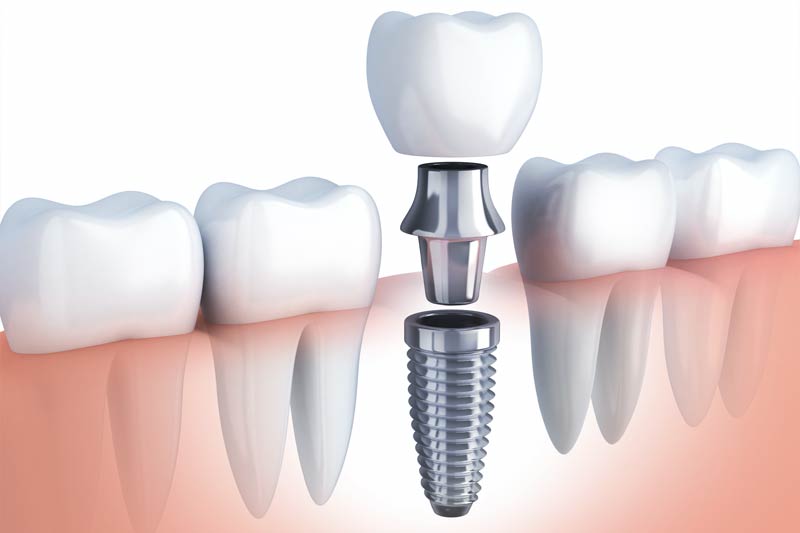
A dental implant replaces the root portion of a missing tooth and provides a foundation for a new restoration. For a single missing tooth, an implant and a dental crown can restore the space without requiring neighboring teeth to support the replacement.
Dr. Keith Egan has completed additional training in dental implant surgery and restoration, bone and gum grafting, and implant-supported dentures.
Replacing a Single Missing Tooth
A single-tooth implant typically includes the surgical placement of the implant in the jawbone and the restorative portion consisting of an abutment and an implant crown. Once completed, the restoration functions independently rather than relying on neighboring teeth for support.
This can be an important advantage compared with a traditional bridge, but neither option is automatically right for every patient. Neighboring teeth, available bone, bite, health history, treatment time, cost, and other factors all matter.
How Implant Treatment Works
Treatment begins with examination and planning. Digital X-rays and CBCT imaging may be used when appropriate. If a tooth needs removal, implant placement may sometimes occur at the same visit; in other situations, healing first may provide a better result.
The implant is positioned in relation to the final tooth, not simply wherever bone is available. After placement, the implant heals and integrates with the surrounding bone. Once ready, a final crown is designed to restore the missing tooth and work with the surrounding teeth, bite, and gum tissue.
Implant Surgery and Restoration
The surgical position of an implant and the design of the final restoration need to work together. Dr. Egan's training includes both implant surgery and restoration, allowing the treatment to be planned with the final tooth in mind from the beginning.
Do I Have Enough Bone?
Implants require adequate bone in an appropriate position. Some patients have sufficient bone without grafting; others may benefit from socket preservation or bone grafting before or during implant treatment. CBCT imaging can help us evaluate the available anatomy.
Dental Implant or Bridge?
An implant replaces the missing tooth independently. A traditional bridge uses adjacent teeth for support and may make excellent sense when those teeth already need significant restorative treatment. The condition of the entire area should guide the decision.
Other Uses for Dental Implants
Although single-tooth replacement is the primary focus, implants can also support implant-supported bridges, removable implant-retained dentures or overdentures (sometimes called snap-on or snap-in dentures), and fixed full-arch restorations such as All-on-X. These treatments require more extensive surgical and restorative planning and are evaluated individually.
How Long Do Dental Implants Last?
A well-planned, healthy, and well-maintained dental implant can function for many years and may last a lifetime. Long-term success depends on surrounding bone and gum health, implant position, bite, hygiene, smoking or tobacco use, health conditions, grinding or clenching, and ongoing maintenance. The restoration attached to the implant may sometimes need maintenance, repair, or replacement even when the implant itself remains healthy.
Can I Get an Implant the Same Day My Tooth Is Removed?
Sometimes. Immediate implant placement can be appropriate in selected situations, but bone, infection, gum tissue, implant stability, and the final restorative plan all influence that decision.
What Are Snap-On Dentures?
"Snap-on dentures" is a common patient term for certain implant-retained or implant-supported removable dentures. Dental implants provide attachment points that help stabilize the denture.
What Is All-on-X?
All-on-X is a term commonly used for full-arch treatment in which a fixed restoration replacing an entire arch of teeth is supported by multiple dental implants. The appropriate number and position of implants varies by patient and treatment plan.