Invisalign Clear Aligners in Salt Lake City
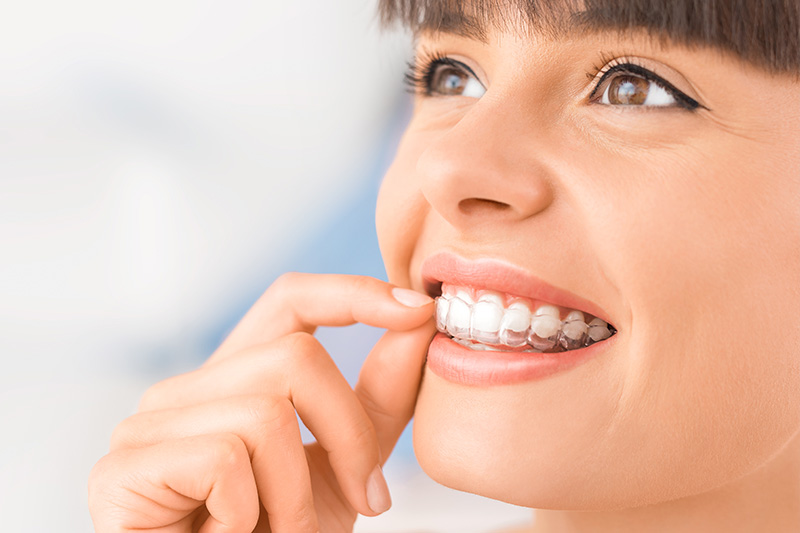
Invisalign clear aligners can be used to improve the position and alignment of teeth without traditional braces.
At Lakeside Dental, Dr. Keith Egan provides Invisalign treatment for adults and teens. Every patient's teeth, bite, goals, and treatment needs are different, so the first step is understanding what you would like to change and evaluating the best way to accomplish it.
For some patients, Invisalign treatment at Lakeside Dental may be a great fit. For others, treatment with an orthodontist may offer advantages. Our goal is to help you understand your options and find the right solution for your situation.
What Is Invisalign?
Invisalign is an orthodontic treatment that uses a series of custom-made clear aligners to gradually move teeth into planned positions. The aligners are removable for eating, brushing, and flossing. Invisalign is one type of clear aligner therapy; diagnosis, treatment planning, monitoring, and patient cooperation are just as important as the aligners themselves.
What Can Invisalign Treat?
- Crowded teeth
- Spaces or gaps
- Rotated or misaligned teeth
- Teeth that shifted after previous orthodontic treatment
- Certain bite concerns
- Tooth position as part of cosmetic or restorative planning
Invisalign for Adults and Teens
Adults consider Invisalign for untreated alignment concerns, relapse after braces, or changes they would like to make to their smile. Invisalign can also be an option for teens who are able to wear the aligners consistently. Age alone does not determine candidacy; dental health, bite, treatment goals, and the type of movement needed are more important.
Invisalign as Part of Cosmetic or Restorative Dentistry
Sometimes the most conservative way to improve the appearance of a tooth is to move it rather than restore it. Invisalign may be considered before bonding, direct composite veneers, ceramic veneers, crowns, or replacement of missing teeth. In some cases, tooth movement can reduce the amount of restorative treatment needed afterward.
Invisalign vs. Bonding or Veneers
Invisalign moves teeth. Dental bonding adds composite material. Ceramic veneers change characteristics such as shape, proportion, color, or appearance. If tooth position is the main concern, moving the tooth may be worth considering before altering healthy tooth structure. Sometimes a combination is appropriate.
How Treatment Works
Treatment begins with evaluation and appropriate records such as scans, photographs, and X-rays. Dr. Egan uses Invisalign's digital planning tools to develop the case. A series of aligners is made, and periodic appointments allow us to monitor tooth movement, aligner fit, and progress.
Attachments, Wear and Refinements
Some treatments use tooth-colored attachments to help the aligners produce specific movements. Aligners need to be worn consistently to work. Teeth do not always move exactly as predicted, so additional refinement aligners may sometimes be needed to reach treatment goals.
Retention After Invisalign
Retainers are generally recommended after active treatment because teeth can move back toward previous positions over time. We'll discuss an appropriate retention plan when treatment is complete.
When Might an Orthodontist Be Involved?
Every patient's orthodontic needs are different. If Dr. Egan believes specialist care would be a better fit, we'll explain what we're seeing and why an evaluation with an orthodontist may be helpful. Our goal is to help you find an appropriate solution whether that's treatment with us or with a specialist.
Is Invisalign the Same as Clear Aligners?
Invisalign is a specific clear aligner system. Clear aligners or clear aligner therapy are broader terms for orthodontic treatment that moves teeth using a series of removable aligners.
Can Invisalign Fix Teeth That Moved After Braces?
Yes, in many cases. Invisalign may be an option for correcting orthodontic relapse, depending on the amount of movement and the current bite.
Will I Need a Retainer After Invisalign?
Yes. Retention is an important part of maintaining orthodontic results because teeth can continue to shift throughout life.