
Retainers in Salt Lake City
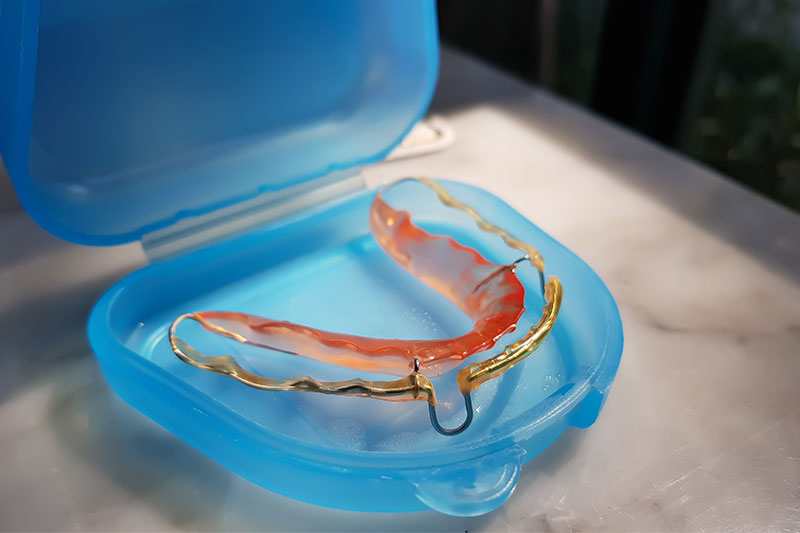
Moving teeth is only part of orthodontic treatment. Keeping them there is important too.
After Invisalign, braces, or other orthodontic treatment, teeth have a natural tendency to move back toward their previous positions. This is known as orthodontic relapse, or simply relapse. Retainers help resist that movement and maintain tooth position over time.
At Lakeside Dental, we provide retainers for patients completing Invisalign treatment as well as patients who need a new or replacement retainer after previous orthodontic treatment.
Why Do I Need a Retainer?
The tissues surrounding teeth need time to adapt after orthodontic movement, but the tendency for teeth to shift does not completely disappear. Growth and aging, bite changes, tooth loss, dental treatment, habits, and other factors can also contribute to movement throughout life. Retention should be considered an ongoing part of maintaining an orthodontic result.
Types of Retainers
Clear Retainers
Clear removable retainers fit closely over the teeth and are commonly used after Invisalign and other orthodontic treatment. You may also hear this style referred to as Essix-style, vacuum-formed, or clear orthodontic retainers. At Lakeside Dental, we commonly use Vivera retainers following Invisalign treatment.
Vivera retainers are digitally manufactured from a scan of your teeth using a material designed specifically for long-term orthodontic retention, and compared with many traditional in-office Essix-style retainers, they tend to offer greater durability and resistance to cracking, distortion, and wear while maintaining a precise, comfortable fit. Vivera retainers are also typically provided in multiple sets, giving patients convenient backups as retainers naturally wear, become damaged, or get lost over time. In-office Essix-style retainers remain a good option, particularly when a retainer is needed quickly or for a specific situation. The best choice depends on your previous treatment, bite, expected wear, and individual needs.
Fixed or Permanent Retainers
A fixed or bonded retainer uses a wire attached to the back of selected teeth. It does not depend on remembering to put it in each night, but it requires careful cleaning and monitoring for loose bonding, broken wires, and plaque accumulation.
Hawley Retainers
A Hawley retainer is a removable appliance traditionally made with an acrylic portion and a wire that passes around the teeth. It may be appropriate in certain situations.
How Long Do I Need to Wear a Retainer?
Retention is long term. How often a removable retainer is worn may change over time, with many patients eventually transitioning to nighttime wear. There isn't an age when teeth suddenly stop being capable of moving.
Lost, Broken or Poor-Fitting Retainers
If you lose or break a retainer, contact us rather than waiting until you notice movement. A retainer that no longer fits may be distorted, or your teeth may have changed position. Don't force a retainer that no longer seats properly; we can evaluate whether a replacement retainer or additional tooth movement makes more sense.
Orthodontic Relapse
If teeth have started moving back toward previous positions, what to do next depends on how much they have moved and what you would like to accomplish. A new retainer may be appropriate if you are happy with the current position. If you would like to move the teeth again, Invisalign or another orthodontic approach may be worth considering. We'll help determine an appropriate next step, whether that is with us or an orthodontic specialist.
Retainer vs. Night Guard
A traditional orthodontic retainer is primarily intended to maintain tooth position, while a night guard is designed to protect teeth and restorations from forces associated with grinding or clenching. If you need both retention and protection, we'll consider both needs when recommending an appliance.
Can I Get a New Retainer if I Had Braces Somewhere Else?
Yes. We can evaluate your current tooth positions and determine whether a replacement retainer is appropriate even if your original orthodontic treatment was completed elsewhere.
What Is the Difference Between an Invisalign Aligner and a Retainer?
An Invisalign aligner is designed to actively move teeth. A retainer is primarily designed to hold teeth in their current positions after active movement is complete.