
Dental Veneers in Salt Lake City
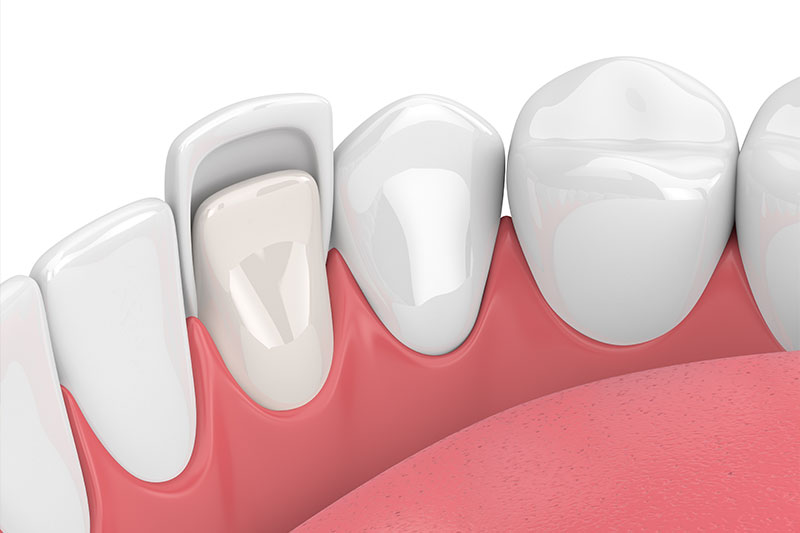
Dental veneers can be used to change the shape, color, proportion, or overall appearance of certain teeth. They can make a significant difference in a smile, but they aren't the right solution for every cosmetic concern.
At Lakeside Dental, the first step isn't deciding how many veneers you need. It's understanding what bothers you about your smile and what you would like to change.
What Are Ceramic Veneers?
A veneer is a thin restoration bonded to the front surface of a tooth. Ceramic veneers are individually designed to change certain characteristics of a tooth while blending naturally with the surrounding teeth.
You may also hear these restorations referred to as porcelain veneers. That term is still commonly used, but modern veneers can be made from several types of dental ceramics. We use the broader term ceramic veneers because it more accurately reflects the range of materials available today.
Are Veneers Right for Me?
Before recommending veneers, Dr. Egan considers remaining tooth structure, enamel available for bonding, existing restorations, tooth position, bite, grinding or clenching, gum health, surrounding teeth, and your goals. If whitening, bonding, Invisalign, or another approach could accomplish the goal more conservatively, that should be part of the conversation.
Planning Your Smile
There isn't one tooth shape, shade, or smile design that is right for everyone. Depending on the case, photographs, digital scans, models, mock-ups, or other planning tools may be used to evaluate proportions and communicate potential changes before treatment begins.
What Is the Veneer Process?
Treatment begins with an examination and consultation. The teeth may require some preparation depending on their position, existing structure, and the changes being made. Digital scans or impressions are used to create the restorations, and temporary restorations may be used while the final veneers are being made. Before bonding, Dr. Egan evaluates fit, appearance, and relationship to surrounding teeth.
Veneers vs. Dental Bonding
Dental bonding uses tooth-colored composite applied directly to the tooth and can be a conservative option for smaller changes. Ceramic veneers are custom-made restorations and may provide more control for larger changes in shape, color, proportion, or appearance. Neither option is automatically better; the right choice depends on the tooth and what we're trying to accomplish.
Veneers vs. Invisalign
Sometimes the concern is tooth position rather than tooth shape. In those situations, moving the teeth with Invisalign may be worth considering before changing tooth structure with restorations. Orthodontic and cosmetic treatment can also be combined when appropriate.
How Long Do Ceramic Veneers Last?
Well-designed and well-maintained ceramic veneers can last for many years and, in some cases, may last a lifetime. There isn't a predetermined lifespan for a restoration. Longevity depends on the underlying tooth, bite, hygiene, diet, grinding or clenching, and how well the restoration is protected and maintained. Veneers may sometimes need maintenance, repair, or replacement.
Are Porcelain Veneers and Ceramic Veneers the Same Thing?
The terms are often used interchangeably. Porcelain is one type of dental ceramic, while ceramic is the broader term for the range of modern materials available for veneers.
Do Veneers Require Removing Tooth Structure?
Some preparation may be necessary, although the amount varies considerably. Preserving healthy tooth structure when possible is an important part of treatment planning.
Are Veneers Reversible?
That depends on how the tooth was treated. If tooth structure has been removed to accommodate a veneer, the tooth will generally continue to require a restoration.