
Tooth Extractions in Salt Lake City
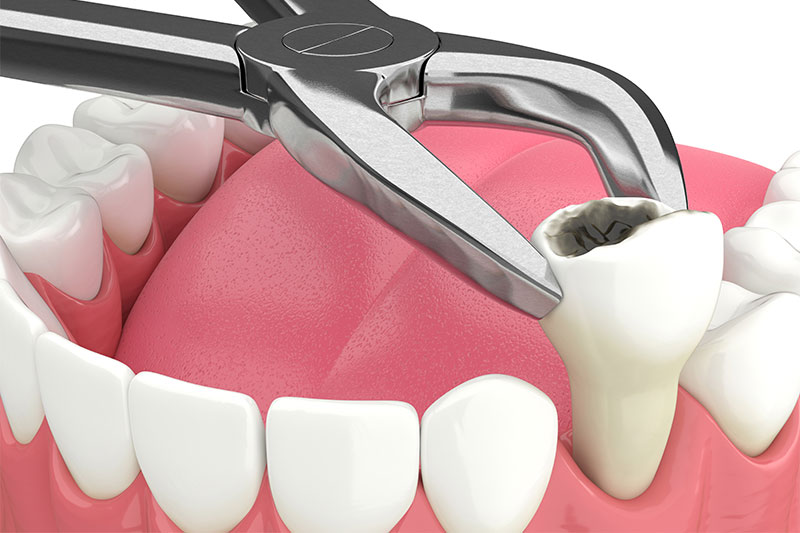
Our goal is to preserve natural teeth when they are healthy, restorable, and have a reasonable prognosis. Sometimes, however, removing a tooth is the most appropriate treatment.
A tooth may need extraction because of extensive decay, fracture, infection, bone loss, trauma, lack of space, or other conditions. When a tooth does need to be removed, we also think about what comes next, including healing, bone preservation, and possible tooth replacement.
When Does a Tooth Need to Be Extracted?
- Extensive decay
- A badly broken or fractured tooth
- A crack that significantly compromises the tooth
- Dental infection
- A tooth that cannot be predictably restored
- Severe periodontal disease or loss of supporting bone
- Trauma
- Impacted or problematic teeth
- Certain orthodontic treatment plans
Save the Tooth or Extract It?
When a natural tooth is restorable and has a reasonable prognosis, preserving it may be an excellent choice. There are also situations where keeping a tooth requires significant treatment but still leaves an uncertain or poor prognosis. We consider remaining tooth structure, fracture or decay, pulp and root condition, bone and gum support, previous treatment, bite, restorability, replacement options, and your goals.
What Happens During an Extraction?
Before treatment, Dr. Egan evaluates your medical history, the tooth and surrounding structures using appropriate X-rays. Local anesthetic is used to numb the area. Some teeth can be removed relatively simply; others require a surgical extraction, which may involve gum access, limited bone removal, or dividing the tooth into sections. Our goal is to keep you comfortable throughout the procedure.
Socket Preservation and Bone Grafting
After a tooth is removed, the supporting bone naturally remodels. If a future dental implant is being considered or preserving ridge dimensions is important, we may recommend socket preservation or a bone graft. Not every extraction requires grafting; the decision depends on the site, existing bone, future treatment plan, and other factors.
Can an Implant Be Placed at the Same Time?
Sometimes. Immediate implant placement can be an excellent option in selected situations, but it is not automatically the best choice for every extraction site. Available bone, infection, gum tissue, implant stability, esthetics, bite, and the final restorative plan all influence treatment timing.
What Are My Options After Extraction?
Depending on the tooth and your goals, replacement options may include a dental implant, dental bridge, removable partial denture, or sometimes leaving the space alone. You do not need to decide how you want to replace the tooth before we evaluate it.
Dry Socket and Healing
Some soreness, swelling, and tenderness can be expected after an extraction. Dry socket (alveolar osteitis) is a painful condition that can occur when normal socket healing is disrupted. If pain increases several days after extraction rather than gradually improving, contact us for evaluation.
Wisdom Teeth and Specialist Care
Most teeth, including many wisdom teeth, can be safely extracted in a general dental office. However, the complexity of the extraction, tooth position, surrounding anatomy, medical history, sedation needs, and other individual factors may make treatment with an oral surgeon more appropriate. Dr. Egan will evaluate the tooth and your individual situation and help determine whether treatment is best completed at Lakeside Dental or with an oral surgeon.
Is It Better to Get a Root Canal or Pull the Tooth?
It depends on the tooth and its long-term prognosis. When a natural tooth can be predictably restored with a good prognosis, keeping it is often the preferred option. In other situations, the tooth may be too compromised to restore predictably, and extraction may make more sense. When a tooth is removed, replacement is often recommended to help maintain chewing function and reduce potential consequences of tooth loss, such as bone loss and shifting or drifting of neighboring teeth. Replacement options may include a dental implant, bridge, or removable partial denture depending on the situation.
Do I Need a Bone Graft After an Extraction?
Not every extraction requires a bone graft. Bone grafting can help support more predictable healing and preserve the shape and volume of the bone after a tooth is removed, particularly when preparing the site for a future dental implant. A bone graft does not necessarily preserve that bone indefinitely, however. Depending on the graft and individual healing, if an implant is not placed, the area can continue to remodel and gradually lose volume over time, potentially making future implant placement less predictable as more time passes. Whether grafting makes sense depends on the extraction site, existing bone, future treatment plans, and individual circumstances.
Can an Infected Tooth Be Pulled?
Yes, an infected tooth can often be extracted when extraction is the appropriate treatment. The clinical situation determines whether antibiotics or other treatment is also needed.